Finasteride Hair Loss Treatment: Does It Work and Is It Safe?
Does finasteride stop hair loss? What the trials show, how long it takes to work, side effect rates, and who should avoid it.
 By Juan Montes
Updated October 3, 2026 · 14 min read
By Juan Montes
Updated October 3, 2026 · 14 min read

Disclosure: PrescribedRX sells its own treatments, so we compete with some of the companies covered here, and we may earn affiliate commissions.
| MEDICAL DISCLAIMER This content is for informational purposes only and does not constitute medical advice. Consult a licensed physician before starting any hormone therapy or treatment. |
|---|
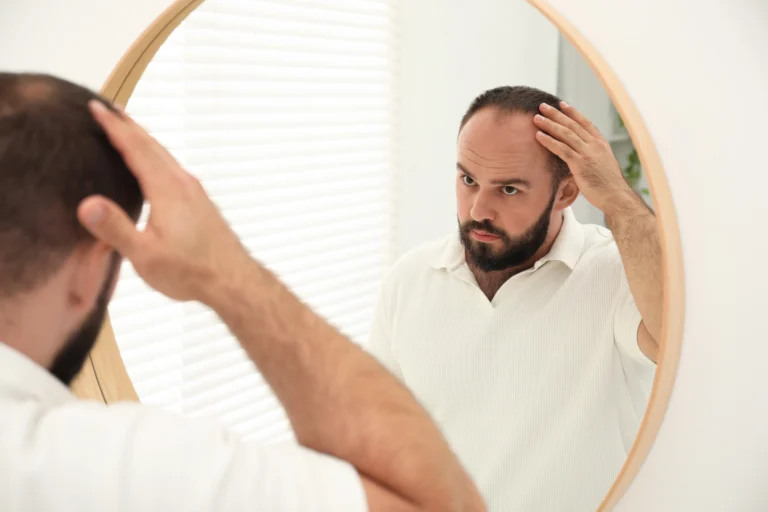
You have noticed more hair in the drain, a hairline creeping back, or a thinning crown that photos keep confirming, and the idea of taking a daily pill that affects your hormones feels like a gamble. That hesitation is one of the most common reasons men delay looking into finasteride hair loss treatment, even when their hair is the thing quietly keeping them up at night.
The worry is usually not about whether something might help. It is about the trade-off: keeping or regrowing your hair versus the risk of side effects you have read about online. This guide is built around that exact tension. It walks through how the medication works, what research suggests about results, and where the real questions about safety lie, so you can approach a hair loss treatment decision with clear information rather than fear or hype.
Nothing here is a recommendation to start or avoid anything. It is the background a reasonable person would want before a conversation with a provider who knows their full health picture.
Why the Finasteride Hair Loss Conversation Matters Now
Male pattern hair loss, known medically as androgenetic alopecia, is the most common cause of thinning hair in men. Research suggests it affects roughly half of men by around age 50, with the likelihood rising further as men get older. For many, it begins quietly in the late twenties or thirties and progresses gradually, which is part of why it is so often noticed only once it is well underway.
Because the condition tends to advance over time rather than reverse on its own, timing can matter. Treatments that target the underlying hormonal driver are generally understood to work better at slowing loss and supporting existing hair than at recovering follicles that have already been dormant for years. That reality is a big reason the finasteride hair loss conversation has moved earlier in many men’s lives.
Access has also changed. What once required an in-person dermatology visit can now often start with a telehealth consultation and a prescription, if a provider determines it is appropriate. That convenience is welcome, but it also means more men are weighing this decision with less hands-on guidance, which makes understanding the basics more important, not less.
How Finasteride Works
To understand the medication, it helps to start with what drives male pattern hair loss in the first place. In genetically susceptible men, a hormone called dihydrotestosterone, or DHT, plays a central role. DHT is a more potent derivative of testosterone, produced when an enzyme called 5-alpha-reductase converts one into the other.
In men prone to pattern baldness, DHT appears to act on follicles at the scalp and trigger a process known as follicular miniaturization. Over repeated growth cycles, affected follicles shrink, the hairs they produce grow shorter and finer, and eventually some follicles stop producing visible hair altogether. Research has found that men with this type of hair loss tend to carry higher DHT levels in the scalp, and that men who naturally produce very little DHT generally do not develop the same pattern. That observation is much of why DHT is viewed as a primary target.
Finasteride works upstream of that process. It is a type II 5-alpha-reductase inhibitor, which means it blocks much of the enzyme activity that converts testosterone into DHT. By lowering DHT in the scalp and bloodstream, the medication is intended to ease the hormonal pressure on follicles, which may slow further miniaturization and, in some men, allow weakened follicles to recover some function.
The drug was first approved for male pattern hair loss in the United States in 1997, after originally being developed at a higher strength to treat an enlarged prostate. Today a licensed provider determines the appropriate strength and approach for hair loss specifically, which is why the medication is prescription-only and dosing is never something to self-manage.
Does Finasteride Work for Hair Loss?
So does finasteride work? The honest answer is that research generally supports it as one of the better-studied options for male pattern hair loss, while also making clear that results vary and are not guaranteed for any individual.
Clinical studies have focused mostly on the crown, also called the vertex, and the mid-front of the scalp. In those areas, research suggests that many men may experience slowed hair loss, and some may see a degree of regrowth, when the medication is used consistently under medical supervision. Evidence is weaker for the temples and a receding frontal hairline, and there is limited data on men who are already extensively bald, since trials did not focus on that group.
Two points come up repeatedly in the research and are worth setting expectations around. First, results are not immediate. It often takes several months of consistent daily use before any change becomes noticeable, and improvements, when they happen, tend to build gradually rather than appear all at once. Second, the effect depends on continued use. If the medication is stopped, DHT levels in the scalp generally rise again, and any hair preserved or regained is likely to be lost over the following months. In practical terms, this is closer to ongoing maintenance than a one-time fix.
Some men also notice increased shedding in the early weeks. This can feel alarming, but it is often described as a temporary phase as follicles shift growth cycles, rather than a sign the medication is making things worse. A provider can help distinguish expected early shedding from a genuine reason to reassess.
Finasteride Side Effects: What the Research Shows

For most men weighing this decision, finasteride side effects are the heart of the hesitation, and they deserve a careful, non-dismissive look.
The most commonly reported finasteride side effects fall into the sexual category. These can include reduced libido, difficulty with erections, and changes in ejaculation or orgasm. Across the research, these are the effects men report most often, though it is worth noting that the share of men affected in controlled studies has generally been modest, and many men report no sexual side effects at all.
In the majority of cases described in the literature, these effects appear to be reversible, easing either during continued treatment or after the medication is stopped. That said, the picture is not uniform. Some men report sexual symptoms that persist for months or longer after discontinuing the drug, a cluster of effects that has been described as post-finasteride syndrome.
The medical community has not reached consensus on this. Studies to date are mixed and often limited in quality, and researchers have not been able to definitively confirm or rule out a persistent syndrome as a distinct condition. What is clear is that regulators, including in the United States, have updated the medication’s labeling over the years to reflect reports of persistent sexual dysfunction.
Mood-related effects have also been reported, including depression and anxiety, and these too appear on updated warning labels in some regions. As with the sexual side effects, the strength of the evidence is debated, and it can be difficult to separate the medication’s role from the psychological weight of hair loss itself, which is significant for many men. Less commonly, some men report breast tenderness or enlargement.
The reasonable takeaway is not that the medication is dangerous, nor that it is risk-free. It is that finasteride carries a real, if for most men modest and often reversible, side effect profile that is worth discussing candidly with a provider. That conversation matters most for anyone with a history of depression, sexual dysfunction, or fertility concerns, since those are exactly the situations where individual medical guidance counts.
Setting Realistic Expectations About Results
A lot of disappointment with hair loss treatment comes down to expectations rather than the medication itself. Knowing what a reasonable outcome looks like makes it easier to judge whether something is working and to avoid quitting too early or hoping for too much.
For many men, the most realistic goal is holding on to the hair they still have and slowing the rate of loss, with some regrowth as a possible bonus rather than the main event. Research consistently frames these treatments as better at preservation than full reversal, which is why providers often emphasize that catching loss earlier tends to leave more to protect. A man with mild, recent thinning generally has different prospects than someone who has been bald across the crown for a decade.
It also helps to measure progress the right way. Because hair changes slowly and daily mirror checks are noisy, consistent dated photos taken every few months under similar lighting are far more reliable than impressions. Many providers reassess at set intervals to decide whether to continue, adjust, or change course. Treating the first stretch as a trial period, rather than a permanent decision, tends to reduce both anxiety and regret.
Topical Finasteride and Other Formulations
Most of the long-term research involves the oral form, but the medication now exists in other formats, and topical versions have drawn growing interest. The idea behind a topical formulation is to act on the scalp while limiting how much of the drug enters the bloodstream, in the hope of reducing systemic side effects.
Early research is promising, and some studies suggest topical approaches can lower scalp DHT, but the evidence base is smaller and less mature than for the oral version, and formulations vary.
What that means in practice is simple. A topical option may be worth raising with a provider, especially for men who are cautious about systemic side effects, but it is not automatically a guaranteed-safe alternative, and the data supporting it is still developing. A provider can explain the current trade-offs and whether a particular formulation is appropriate for your situation.
Finasteride vs Other Hair Loss Options
Finasteride is rarely the only option on the table, and for many men it is considered alongside or in combination with other approaches.
The most common comparison is with minoxidil, a topical (and sometimes oral) treatment that works through an entirely different mechanism. Rather than targeting DHT, minoxidil is thought to extend the active growth phase of hair and improve blood flow to follicles.
Because the two work in different ways, some research suggests that using them together may offer more benefit than either alone for certain men, though that is a decision for a provider to weigh based on your situation. If you want to understand how the two compare in plain terms, our Minoxidil vs Finasteride breakdown lays out the differences side by side.
Beyond medications, options can include topical formulations, low-level laser devices, microneedling, and, in appropriate cases, hair transplantation. The right path depends heavily on the pattern and stage of loss, how the scalp responds, tolerance for side effects, cost, and personal preference. For a wider view of what is available and how the leading approaches stack up, our roundup of the best hair loss treatments for men is a useful starting point.
Telehealth platforms have also made these treatments far easier to access, and many men start by comparing the popular subscription services. If you are evaluating providers, our Hims vs Keeps Review compares two of the better-known options on price, process, and what is actually included, which can help you avoid paying for features you do not need.
Combination approaches are increasingly common for this reason. Because finasteride targets the hormonal driver of loss while minoxidil supports the growth cycle and blood flow, some men use both under medical guidance, and a body of research suggests the pairing may outperform either treatment used alone for certain individuals.
That does not make combining treatments the right call for everyone, since it can mean more cost, more steps, and more potential side effects to track. It simply means the question of what to combine, if anything, is worth raising directly with a provider rather than assuming more is always better.
Key Considerations Before You Decide
A few factors tend to matter most when men think through this decision.
Your stage of loss is one. Because these treatments generally protect and support existing hair better than they revive long-dormant follicles, earlier action often gives more to work with. Waiting is a valid choice, but it is worth making it knowingly rather than by default.
Your health history is another. A candid conversation about any history of mood disorders, sexual health concerns, or plans to father children should shape whether and how you proceed. Finasteride can also affect a marker used in prostate cancer screening, so a provider may want to record your baseline and factor that into future testing.
Your tolerance for maintenance matters too. Since the benefits depend on continued use, this is a commitment measured in years rather than weeks, with the understanding that stopping usually means losing ground. Budget plays a role as well, since ongoing treatment and any monitoring are recurring costs rather than a single expense.
| Not sure where you fall on the spectrum of options? The most useful next step is rarely a purchase. It is an honest read of your hair loss stage and health history with a licensed provider who can tell you whether a DHT-targeting medication, a different approach, or simply monitoring makes the most sense for you. Contact PrescribedRX |
What to Ask Your Provider
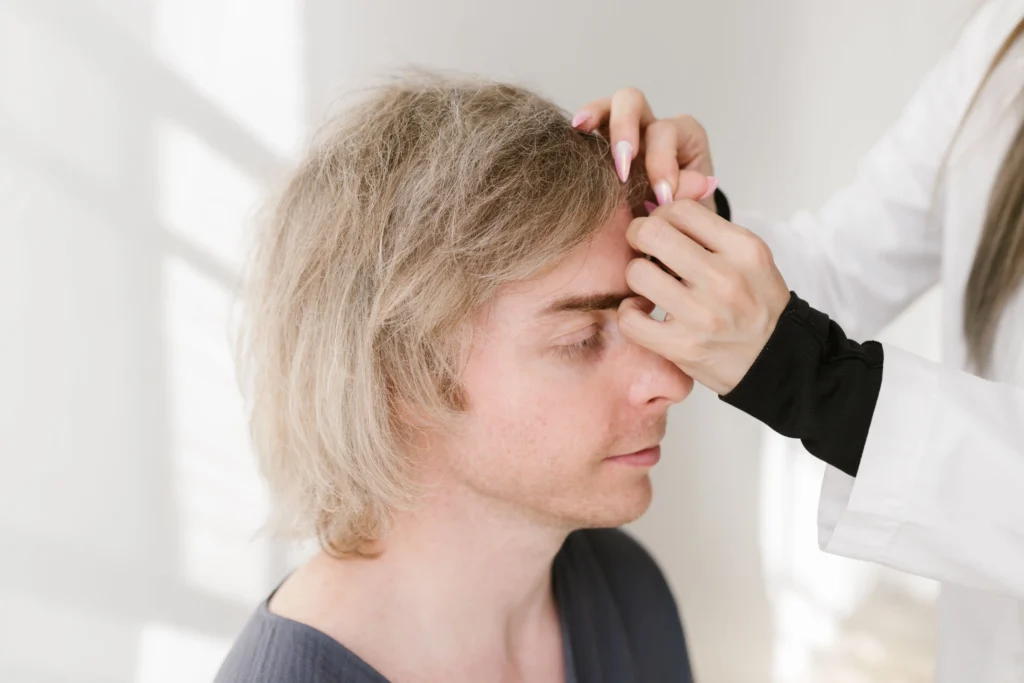
Walking into a consultation with a few clear questions can make the conversation far more useful, especially if hair loss is not something your regular doctor focuses on. Questions worth raising include:
- Given the pattern and stage of my hair loss, how likely is this approach to help, and what would realistic results look like for me?
- What side effects should I watch for, how common are they, and what should I do if I notice them?
- Are there reasons in my health history, such as mood, sexual health, or fertility plans, that would make you cautious about this medication?
- How will we measure whether it is working, and how long should I give it before we reassess?
- If I want to combine treatments or consider alternatives, what would you suggest and why?
- What happens if I decide to stop, and what should I expect afterward?
A good provider will welcome these questions and give you straight answers rather than rushing to a prescription. If you feel dismissed or pushed, seeking a second opinion is reasonable.
Practical Next Steps
If you see yourself in this and want to move from wondering to deciding, a measured path tends to serve men best.
Start by documenting your hair loss. A few dated photos from consistent angles and lighting, taken over time, are far more useful than memory for tracking whether anything is changing. Note when you first noticed thinning and how quickly it seems to be progressing.
Next, get a professional assessment. A provider can confirm whether what you are seeing is male pattern hair loss or something else, since conditions like stress-related shedding, thyroid issues, and nutritional gaps can also cause hair changes and call for different responses. Telehealth has made this first step more accessible for men whose schedules or locations make in-person visits difficult.
Then weigh the options without rushing. The decision is genuinely individual, and the right answer for one man may not fit another. Some will decide a DHT-targeting medication is worth trying. Others will start with a different approach, combine treatments, or choose to monitor for now. Each of those can be a reasonable choice when made with clear information.
Common Questions About Finasteride for Hair Loss
Does finasteride regrow a receding hairline? The evidence is strongest for the crown and the mid-front of the scalp, where studies have focused. Results at the temples and a receding frontal hairline are less predictable, and some men see little change there. A provider can give you a more grounded read based on your specific pattern of loss.
How long does finasteride take to work? It is not a quick fix. Most research describes several months of consistent daily use before any change becomes noticeable, with improvements building gradually after that. This is why providers usually set a reassessment point rather than expecting results in a few weeks.
What happens if I stop taking it? Because the medication works by suppressing DHT, stopping generally allows DHT levels to rise again, and hair that was preserved or regained tends to be lost over the following months. In that sense it functions more like ongoing maintenance than a one-time course.
Can finasteride and minoxidil be taken together? They work through different mechanisms, and some research suggests combining them may help certain men more than either alone. Whether that combination makes sense for you is a decision to make with a provider, who can weigh the added cost and side effect considerations.
How safe is finasteride? Research generally describes it as well tolerated for most men, with a side effect profile that is mostly sexual and, in the majority of cases, reversible. It is not risk-free, and a subset of men report persistent or mood-related effects, so the honest answer is that safety depends on the individual and is best assessed with a provider who knows your history.
The Bottom Line on Finasteride Hair Loss
Finasteride is one of the most studied options for male pattern hair loss, and for many men it may slow loss or support some regrowth when used consistently and under medical guidance. It is not a cure, the results are not guaranteed, and it carries a side effect profile, mostly sexual and for most men modest and often reversible, that deserves a candid conversation rather than a quick click. The finasteride hair loss decision is best made with a provider who knows your history, not from a forum thread at one in the morning.
If you would like a structured starting point, PrescribedRX connects men with licensed providers who can assess your situation, talk through whether a treatment like this fits, and build a plan only if it is clinically appropriate. It is a practical way to move from uncertainty to an informed decision, without committing to anything beyond finding out where you stand.
| Ready to Take the Next Step? Talk with a licensed provider about your hair loss, review your options, and decide what makes sense on your timeline, with no pressure to start anything. Contact PrescribedRX |
Related reading
More on hair loss treatment:
- Hair loss guide
- Oral minoxidil side effects
- Best hair loss treatments men
- Minoxidil vs finasteride
- Hims vs keeps
- Hims vs rogaine
- Happy head review
Hair Loss Plans From PrescribedRX
PrescribedRX prescribes hair loss treatment through clinicians licensed in your state:
- Hair We Grow. A compounded oral chewable containing finasteride and minoxidil, taken daily.
Pricing is published on the pricing page before you start an intake, and every plan is listed on the plans page.
This is a compounded preparation. Compounded drugs are not reviewed or approved by the FDA for safety or effectiveness. Oral minoxidil is not FDA approved for hair loss at any dose. Treatment outcomes are not guaranteed.
This article is for general information. It is not medical advice and it is not a recommendation for any particular treatment. Whether a treatment is appropriate for you is a decision for a licensed clinician who has reviewed your health history and current medications.
About the author
Juan MontesJuan Montes writes and reviews PrescribedRX's clinical content, covering testosterone replacement therapy, men's sexual health, weight management and hair loss. He trained as a Professional Nurse at the Colombian Red Cross in Cali, Colombia, and has worked in healthcare since 2011, roughly six of those years in direct emergency and critical care nursing. He served as Head Nurse in Emergency…
More from Juan →This article is for information only and is not medical advice. Treatment is prescribed solely at the discretion of a licensed provider following a clinical evaluation.