
The short answer
No. Running does not raise your resting testosterone, and at high volumes over years it is associated with lower levels.
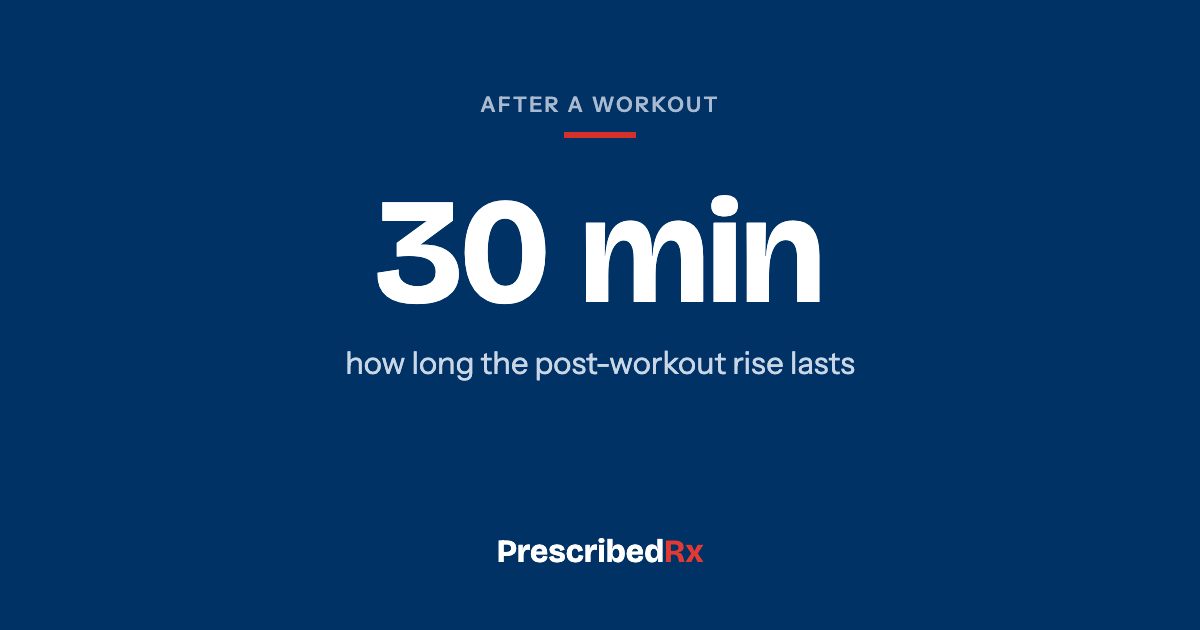
Exercise produces a testosterone spike that is gone within half an hour. It does not change the number your blood test measures.
What does change that number is losing body fat and sleeping properly.
The spike is real and it is brief
Resistance training raises testosterone acutely. So does high-intensity endurance work at around 90% of VO2 max or above.
Then it ends.
After resistance exercise, testosterone returns to baseline or below within 30 minutes. After endurance exercise, the rise is not sustained at 20 minutes into recovery.
The response is larger with big compound movements, moderate-to-high intensity, higher volume and shorter rest periods. It is blunted in men with obesity and smaller in older men.
None of that shows up on a morning blood test taken on a different day.
The spike does not build muscle either
This is worth knowing because it is the reason the acute rise gets so much attention.
A 15-week study had twelve men train one arm in a low-hormone condition and the other arm followed by high-volume leg work that significantly raised testosterone, growth hormone and IGF-1.
Muscle cross-sectional area increased 12% in the low-hormone arm and 10% in the high-hormone arm. The difference was not significant. Neither was strength.
A 12-week study of 49 resistance-trained men found no hormone measurement predicted muscle growth. What did predict it was androgen receptor content inside the muscle — how well the tissue responds, not how much hormone is circulating.
Chasing the post-workout testosterone spike is chasing something that does not do the job it is credited with.
Training does not raise resting testosterone in healthy men
This is the direct answer to the question, and it comes from the strongest evidence available.
A meta-analysis of 11 randomised controlled trials covering 421 previously inactive men — aerobic, resistance and combined training, median around 12 weeks — found a negligible effect on resting total testosterone. Standardised mean difference 0.02.
There was no moderation by training type, age, weight status or assay method. It did not matter what they did, how old they were, or how heavy they were.
In older men specifically, a review of 22 studies found resistance training had no effect on basal testosterone. Endurance and interval training showed small positive effects, but from a thin evidence base with unclear clinical significance.
The exception: men who are metabolically unwell
There is one population where exercise does appear to move the number.
A 2024 meta-analysis of aerobic training in men with obesity or type 2 diabetes found a moderate increase in testosterone. Three studies. Sixty-two men. Absolute change not reported.
That is a small evidence base, and it is heavily confounded with the thing discussed next.
What actually moves the number
Body fat. A review of 24 trials found:
| Method | Average testosterone increase |
|---|---|
| Diet-induced weight loss | +83 ng/dL |
| Bariatric surgery | +251 ng/dL |
The amount of weight lost predicted the rise better than the method used. Bigger increases in younger men, non-diabetic men, and men who were heavier to begin with.
Compare that to the 11-trial exercise meta-analysis finding essentially nothing. Exercise helps you lose fat. Fat loss raises testosterone. Exercise on its own, without fat loss, does not.
Sleep. Ten healthy young men slept five hours a night for eight nights. Daytime testosterone fell 10 to 15%, most pronounced in the afternoon and evening.
For scale, the authors noted that normal ageing reduces testosterone by 1 to 2% per year. Eight bad nights did roughly a decade worth.
That is a bigger effect than any exercise programme has produced in a healthy man.
High-volume endurance training and the other direction
There is a recognised pattern in long-term endurance athletes: persistently lower resting testosterone.
A study compared 196 male distance runners against 196 men matched on age, BMI and ethnicity. Resting testosterone declined progressively with years of training, plateauing at about 30% below controls after five years, with no further fall at ten or fifteen years.
One prospective study followed fifteen previously sedentary men building to an average of 56 km a week over six months. Total testosterone fell significantly.
Three caveats that matter:
The main study is cross-sectional. It cannot separate the effect of training from the possibility that men with certain physiologies self-select into distance running.
The lead researcher own review notes that for many of these men, levels are low but still within the normal range and rarely meet clinical definitions of hypogonadism.
The same review describes the total research base on this as extremely small, with most foundational work dating from the 1980s and 90s, inconsistent diagnostic criteria, and no established prevalence. Whether it represents dysfunction or adaptation is unresolved — these men show no overt health problems or performance decrement.
So: running a lot is associated with lower testosterone. Whether that matters is genuinely unknown.
What about a hard training block?
Twenty well-trained cyclists did three supervised high-intensity sessions a week for four weeks.
Performance improved. Total testosterone rose 8.1%. Free testosterone was unchanged.
But other markers moved the wrong way: resting metabolic rate fell 3%, T3 fell 4.8%, cortisol rose 12.9%.
The useful nuance: a hard four-week block did not suppress testosterone. The warning signs showed up elsewhere. The testosterone suppression story is about sustained energy deficiency over months and years, not a tough month.
Can exercise fix genuinely low testosterone?
This has been tested directly.
Eighty-three older men with obesity and confirmed low testosterone were randomised to six months of intensive lifestyle therapy — supervised diet and exercise — plus either testosterone or placebo.
In the lifestyle-plus-placebo arm, testosterone rose about 27% and remained low. In the testosterone arm it rose about 167%.
Physical function improved similarly in both groups. Testosterone added benefit for aerobic capacity, preserving lean mass during weight loss, and bone density.
Six months of supervised diet and exercise did not normalise testosterone in men who were genuinely hypogonadal — though it improved how they functioned regardless.
What the evidence supports
| Claim | Status |
|---|---|
| Exercise causes an acute testosterone rise | Well supported |
| That rise lasts under 30 minutes | Well supported |
| The acute rise drives muscle growth | Refuted |
| Training raises resting testosterone in healthy men | Refuted, 11 RCTs, 421 men |
| Resistance training raises basal testosterone in older men | Refuted |
| High-volume endurance training is associated with about 30% lower levels | Moderately supported, mostly cross-sectional |
| Fat loss raises testosterone | Well supported, 24 trials |
| Sleep restriction lowers testosterone 10–15% | Supported, from a 10-man study |
| Exercise can normalise genuinely low testosterone | Unsupported |
If your testosterone is genuinely low
Exercise is worth doing for reasons that have nothing to do with hormones. It is not a testosterone intervention.
If you have symptoms and suspect low levels, the diagnosis requires two early-morning fasting blood tests, interpreted alongside those symptoms. About 30% of men whose first result is low are normal on the second.
The Endocrine Society position as of July 2026: for men with a BMI over 27 and no other identified cause, weight loss is generally first-line before testosterone therapy. That is consistent with everything above.
Our $69 TRT Health Assessment starts the process. A US-licensed provider reviews your intake and orders the lab work needed. If your levels and symptoms support treatment, TRT is $387 every 10 weeks — about $39 a week, the same at every dose. If they do not, you are not prescribed.
Prescription required. A provider decides if treatment is appropriate. Payment never guarantees a prescription. Not available in every state.
Common questions
Does running increase testosterone? Not resting levels. High-intensity running produces a brief rise that fades within about 20 minutes. Sustained high-volume running is associated with lower resting levels.
Does lifting weights increase testosterone? Acutely yes, for under 30 minutes. Across 11 randomised trials it did not raise resting testosterone.
Is cardio bad for testosterone? Ordinary amounts, no. Very high-volume endurance training over years is associated with levels roughly 30% below matched controls, though usually still within the normal range.
What raises testosterone naturally? Losing body fat has the best evidence — an average of 83 ng/dL from diet-induced weight loss across 24 trials. Adequate sleep matters too; eight nights of five-hour sleep cut daytime testosterone by 10 to 15%.
Can I fix low testosterone with exercise? The one trial testing this found six months of supervised diet and exercise left levels low in men who were genuinely hypogonadal, though function improved.
Related reading
- Exercises and testosterone — our guide to training and hormones.
- Average testosterone levels by age — what normal looks like for your age.
- Nicotine and testosterone — another number that moves the wrong way.
- At-home testosterone testing — how to find out where you actually stand.
This article is for general information. It is not medical advice and it is not a recommendation for any particular treatment. Whether a treatment is appropriate for you is a decision for a licensed clinician who has reviewed your health history and current medications.